Contact Us
Contact Us

Your Total Safe Patient Handling Partner
1000 Items
2026 Best Reclining Shower Chair for Global Buyers?
Choosing the 2026 best Reclining Shower Chair requires more than comparing prices or attractive product photographs. Global buyers need dependable support during bathing, especially when users have limited balance, reduced strength, or recovery-related mobility challenges. A suitable chair should provide stable positioning, smooth reclining control, comfortable padding, and practical caregiver access. Details matter.
This guide examines frame strength, seat width, backrest adjustment, foot support, drainage, brakes, and cleaning requirements. We also consider bathroom dimensions, door clearance, transfer space, and the chair’s total weight. A model that fits one bathroom may be unsuitable for another. At a 115-degree recline, for example, the backrest may improve comfort but require additional wall clearance. Small differences can affect daily safety.
Reliable evaluation should include manufacturer specifications, warranty terms, replacement-part access, and verified user feedback. Buyers should confirm claimed certifications with the seller and check whether local safety requirements apply. International shipping also deserves attention. Packaging quality, assembly instructions, return policies, and after-sales support can influence the real value of a purchase. No model is perfect. Some chairs offer excellent comfort but limited maneuverability, while lighter designs may sacrifice stability. This comparison aims to explain those trade-offs clearly, using practical details rather than exaggerated promises. The final choice should reflect the user’s mobility needs, caregiver assistance, bathroom layout, and professional guidance when necessary. A careful decision may take longer, but it can reduce discomfort, avoid unsuitable equipment, and support safer bathing routines.
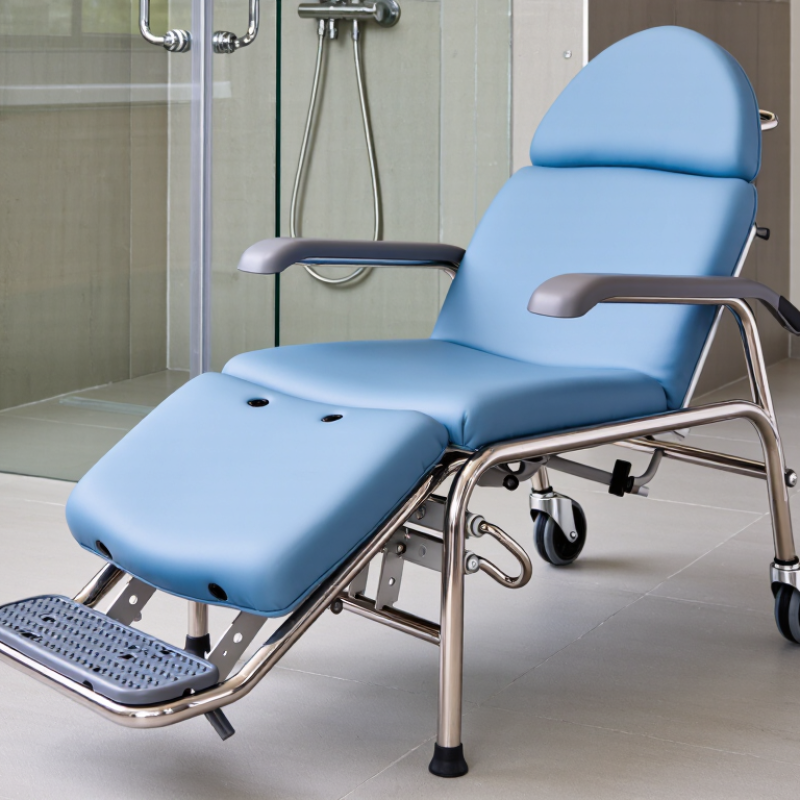
What Is a Reclining Shower Chair? Definitions, Functions, and User Needs
2026 Best Reclining Shower Chair for Global Buyers
A reclining shower chair is a wheeled or stationary bathing seat with an adjustable backrest. Unlike a standard shower stool, it supports the user while the torso moves from upright to a gentler angle. This design can reduce fatigue during bathing and improve comfort for people with limited trunk control, weak balance, or painful movement. It may also help caregivers wash the user more safely. However, reclining does not automatically mean stable. A broad base, reliable locking system, supportive armrests, and an adjustable footrest remain essential.
Its functions should match real bathroom conditions. Look for rust-resistant materials, drainage openings, smooth surfaces, and cushions that are easy to remove and clean. Seat width and height matter, especially when the chair must fit beside a toilet or inside a narrow shower area. Check the maximum user weight, wheel size, brake access, and transfer clearance. A caregiver may need one-handed controls, while an independent user may value simple adjustments more. Small details matter.
User needs are rarely identical. A taller adult may need longer leg support, while a smaller user may require a lower seat and closer armrests. Global buyers should verify dimensions in centimeters and confirm assembly instructions before ordering. Product photos can mislead. A chair may look compact but occupy considerable turning space. It is also worth testing the recline angle and cleaning routine when possible. Comfort is important, but hygiene, balance, and daily handling should guide the final choice.
| Evaluation Dimension | Typical Data or Definition | Primary Function | Best Suited User Need | Global Buyer Consideration |
|---|---|---|---|---|
| Product definition | A wheeled or stationary bathing chair with a backrest that adjusts from an upright position toward a reclined position while the user remains seated. | Provides supported bathing, showering, and personal-care positioning. | Users who cannot safely maintain an upright seated posture for the entire shower. | Confirm whether the product is intended for showering only, bathing, or use over a toilet. |
| Recline range | Common configurations provide approximately 0° to 30° or 0° to 45° of backrest adjustment. The exact angle varies by design. | Reduces forward sliding and supports rest, hair washing, and assisted care. | People with reduced trunk control, fatigue, balance limitations, or limited endurance. | Check whether the stated angle refers to the backrest angle or the full seat-to-back angle. |
| Recline mechanism | Manual lever Gas-assisted Powered | Allows a caregiver or user to change the bathing position. | Manual systems suit simpler care routines; powered systems may help when caregiver force or reach is limited. | Powered models require compatible voltage, charging provisions, water-resistance information, and local electrical compliance. |
| Seat height | Many shower chairs offer a fixed or adjustable seat height of roughly 450–600 mm from the floor, depending on the frame and castors. | Positions the user at a workable height for showering and transfers. | Users transferring from a wheelchair, bed, or standing position. | Measure the shower threshold, bathroom clearance, transfer surface, and caregiver working height before purchase. |
| Seat width | Standard adult widths are commonly about 430–510 mm; wider and bariatric configurations may exceed 510 mm. | Provides seating space while maintaining lateral support. | Users needing additional hip room, lateral stability, or pressure-relieving positioning. | Compare usable internal width—not only the outside frame width—with the user’s body measurements. |
| Weight capacity | Typical adult products may be rated around 100–150 kg; reinforced bariatric products may be rated at 180–250 kg or more. | Supports the user and maintains frame stability during recline and movement. | Users requiring a standard, heavy-duty, or bariatric seating solution. | Use the manufacturer’s stated safe working load, including clothing and any attached accessories; do not infer capacity from seat width. |
| Frame and corrosion resistance | Common materials include coated steel, stainless steel, and aluminum, with plastic or composite seating components. | Provides structural strength and resistance to repeated wet-room exposure. | Facilities and homes with frequent shower use or humid bathroom environments. | Review coating quality, weld protection, fastener material, drainage design, and cleaning-agent compatibility. |
| Mobility | Stationary legs 4 castors Locking castors | Supports stable seated bathing or movement between a bedroom, bathroom, and shower area. | Stationary chairs suit direct transfers; wheeled chairs suit assisted transfers and multi-room care. | For wheeled models, verify total width, turning radius, threshold clearance, brake access, and castor locking performance. |
| Seat and back support | Options may include a contoured seat, padded upholstery, headrest, lateral supports, calf support, footrest, and safety belt. | Maintains alignment and reduces sliding during recline. | Users with poor balance, involuntary movement, limited head control, or high support needs. | Accessories should be adjustable, removable for cleaning, and compatible with the selected recline range. |
| Drainage and hygiene | Open or perforated seating surfaces allow water and cleaning fluid to drain; smooth, non-absorbent surfaces simplify disinfection. | Reduces water pooling and supports routine hygiene. | Home users, hospitals, care homes, and users requiring frequent assisted bathing. | Check for removable cushions, accessible joints, sealed upholstery, and compatibility with the facility’s cleaning protocol. |
| Safety features | Potential features include a pelvic belt, anti-tip geometry, locking brakes, adjustable foot support, armrests, and controlled recline. | Helps reduce sliding, tipping, unintended movement, and lower-limb instability. | Users with balance impairment, muscle weakness, neurological conditions, or reduced alertness. | Safety accessories supplement—not replace—caregiver supervision and an individual risk assessment. |
| Transfer compatibility | Important dimensions include overall width, seat-to-floor height, armrest clearance, front access, and clearance beneath the chair. | Allows safer transfers from a wheelchair, bed, commode, or standing position. | Users who cannot step over a shower tray or need assisted lateral transfers. | Measure the narrowest doorway, shower entrance, bathroom turning space, and any threshold before ordering. |
| Caregiver ergonomics | Useful features include accessible recline controls, push handles, height adjustment, low rolling resistance, and easy-clean surfaces. | Reduces physical effort during positioning, washing, and repositioning. | Professional caregivers and family members providing frequent assistance. | Test control placement from the caregiver’s normal standing position and confirm that brakes are easy to reach. |
| Bathroom fit | Fit depends on the chair’s total width and depth, shower-entry width, turning area, drain position, and available caregiver space. | Ensures the chair can enter, turn, recline, and drain safely inside the bathroom. | Small bathrooms, level-access showers, wet rooms, and institutional washrooms. | Use a dimension drawing and allow additional space for the caregiver, shower hose, and reclined backrest. |
| Best overall selection profile | A suitable chair combines an appropriate recline angle, verified safe working load, stable brakes, adequate seat width, cleanable materials, and bathroom compatibility. | Balances positioning, safety, comfort, hygiene, and daily practicality. | Users requiring regular assisted showering with moderate to high postural support. | Prioritize clinical fit and measured bathroom compatibility over appearance or the largest stated feature list. |
Related Posts
-

Ultimate Guide to Choosing the Right Medical Lift Sling for Your Needs
-
Exploring Technical Trends for Best Medical Hoist in 2025 Global Market Insights
-

Exploring the Surge in Mobile Patient Lift Innovations at the 137th Canton Fair 2025
-
2026 Top Medical Lift Sling Benefits and Uses Explained
-
Exploring Innovative Alternatives to the Best Patient Lift for Enhanced Care Solutions
-
7 Tips for Choosing the Best Mobile Patient Lift