Contact Us
Contact Us

Your Total Safe Patient Handling Partner
1000 Items
China Best Private Label Body Care Manufacturers?
Choosing the best Private Label Body Care manufacturer in China requires more than comparing prices. A reliable partner should demonstrate formulation experience, stable production, and clear quality controls. Look for facilities with documented GMP practices, suitable ISO certifications, and trained quality teams. These details matter when producing body lotion, sugar scrubs, shower gels, or deodorant products.
Ask manufacturers for complete ingredient lists, product specifications, safety data, and recent testing records. Request samples in the exact packaging you plan to sell. A lotion may feel smooth in a sample jar but separate after transport or heat exposure. Check viscosity, fragrance strength, color stability, and container compatibility. Small tests reveal practical problems early.
Communication also shows professional maturity. Strong suppliers explain minimum order quantities, lead times, formula ownership, labeling requirements, and revision costs. They should support compliance with the regulations of your target market. Their answers must be specific, not merely reassuring.
The “best” manufacturer is rarely the cheapest one. It is the supplier that can repeat quality across larger batches. Still, no factory is perfect. Delays happen, and sample performance may change during scale-up. That deserves honest discussion. Visit the facility when possible, review production records, and verify references from comparable brands. A careful evaluation protects your reputation and helps create body care products customers can trust.
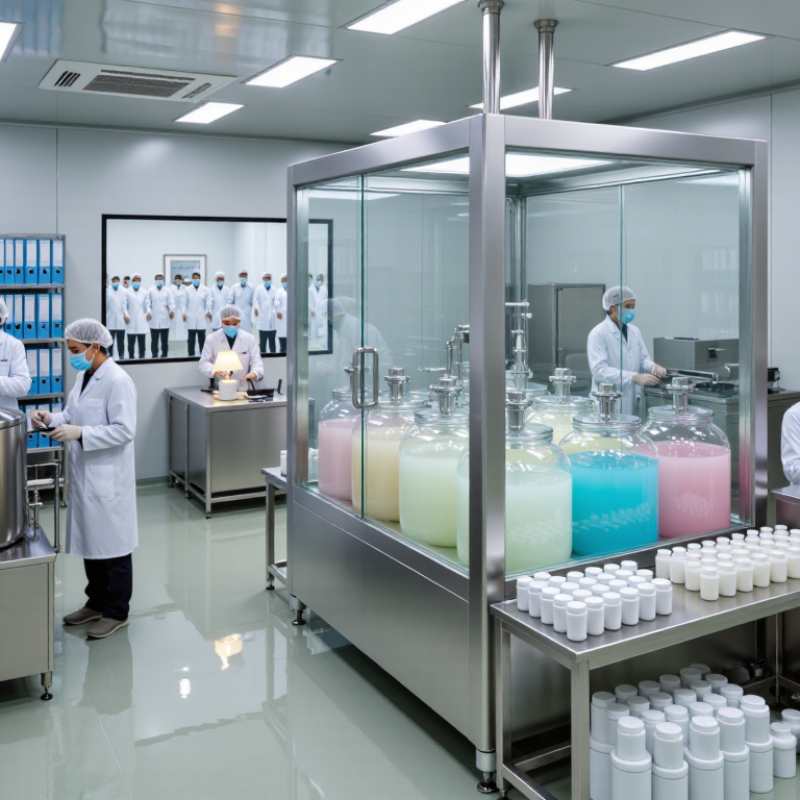
What Are Private Label Body Care Manufacturers in China?
Private label body care manufacturers in China are companies that make products for another business to sell under its own label. They may produce body lotion, shower gel, hand cream, body scrub, or cleansing products. The buyer usually provides a concept, target price, package idea, or formula preference. The manufacturer then manages formulation, filling, labeling, and bulk production.
In practical sourcing, the process often starts with a sample request. A factory may send a 100-gram lotion sample, packaging options, ingredient information, and a quotation. Reliable manufacturers should explain minimum order quantities, production timelines, testing procedures, and quality controls clearly. Buyers should request ingredient lists, certificates of analysis, stability results, and microbial testing records. Production sites should also maintain suitable hygiene systems and documented batch controls.
A polished sample is not enough. A product can feel excellent in a jar but perform differently after six months. I would check color, scent, texture, leakage, and package compatibility during repeated testing. This step is sometimes rushed, especially when buyers focus only on price. That is a weakness worth recognizing. Factory audits, video inspections, and pre-shipment checks can reduce uncertainty, but they cannot remove every risk. Clear specifications and written approval records make cooperation more dependable. The final formula and packaging should also meet the safety and labeling rules of the destination market.
China Best Private Label Body Care Manufacturers? - What Are Private Label Body Care Manufacturers in China?
A practical comparison of common manufacturing capabilities, commercial terms, quality controls, and export considerations for private label body care production in China.
| Evaluation Dimension | Typical Capability in China | What Buyers Should Verify | Commercial or Quality Implication |
|---|---|---|---|
| Product Categories | Body wash, shower gel, body lotion, body cream, hand cream, body scrub, bath products, deodorants, and selected personal-care accessories. | Whether the facility manufactures the requested product type in-house or uses approved subcontractors. | A broader product portfolio can simplify supplier consolidation, but each category may require different equipment and testing. |
| Private Label Service | Manufacturers commonly provide formula selection, fragrance adjustment, packaging coordination, label application, and finished-goods production. | Ownership of the formula, confidentiality terms, revision limits, and responsibility for artwork or regulatory files. | A clearly defined service scope helps prevent unexpected development fees and delays. |
| Minimum Order Quantity | Indicative MOQs often range from approximately 500 to 5,000 units per SKU, depending on formula, packaging, decoration, and factory scale. | MOQ by product, color, fragrance, packaging component, and production batch rather than one general MOQ figure. | Stock packaging and standard formulas usually support lower MOQs than fully customized packaging or formulas. |
| Product Development | Services may include standard-formula customization, fragrance matching, texture adjustment, sample preparation, and stability planning. | Number of sample revisions, development charges, sample lead time, and written acceptance criteria. | Documented specifications reduce differences between approved samples and mass production. |
| Formula Compliance | Manufacturers can formulate products to meet destination-market requirements when the buyer provides the target country and product category. | Ingredient restrictions, allergen declarations, preservative systems, claims support, and the availability of technical documentation. | Compliance should be assessed for the destination market before artwork approval and production. |
| Quality Management | Established facilities may operate documented procedures for incoming materials, batch processing, filling, packaging, and finished-product release. | Quality manual, batch records, deviation handling, complaint process, traceability, and corrective-action procedures. | Documented controls improve consistency and make supplier audits more effective. |
| Certifications and Audits | Depending on the facility and market, available systems may include cosmetic GMP-based controls, ISO management systems, social audits, or customer-specific audits. | Certificate scope, issuing body, validity date, covered site, and whether the certificate applies to cosmetics manufacturing. | A certificate should be checked against the actual production site and the intended product scope. |
| Testing and Inspection | Common controls include raw-material checks, appearance and odor assessment, pH testing, viscosity checks, microbiological testing, and packaging inspection. | Test methods, sampling plans, acceptance limits, retained samples, and whether testing is performed internally or by an independent laboratory. | Pre-agreed specifications provide an objective basis for batch approval. |
| Packaging Options | Common formats include tubes, bottles, jars, pumps, sachets, cartons, and gift sets, with decoration options such as labels, printing, hot stamping, and shrink wrapping. | Material compatibility, closure performance, decoration durability, leakage testing, and packaging supplier traceability. | Packaging selection affects unit cost, minimum order quantity, filling speed, and shipping efficiency. |
| Typical Lead Time | After artwork, formula, packaging, and purchase order approval, mass production commonly requires about 20 to 45 working days; custom packaging may take longer. | Separate timelines for sampling, packaging procurement, regulatory review, production, inspection, and export preparation. | Lead time is driven more by packaging and approvals than by filling alone. |
| Cost Structure | Quoted pricing normally reflects formula, ingredients, primary packaging, secondary packaging, labor, testing, tooling, and shipping terms. | Incoterm, quotation validity, taxes, tooling ownership, sampling fees, payment schedule, and charges for excess or damaged goods. | A line-item quotation makes comparisons between suppliers more reliable. |
| Sampling and Approval | Buyers generally receive laboratory samples, packaging samples, or a pre-production sample before bulk manufacturing. | Written approval procedure, sample retention, color and fragrance tolerance, and change-control requirements. | Only approved specifications and samples should be referenced in the purchase agreement. |
| Export Readiness | Experienced exporters may support commercial invoices, packing lists, certificates of origin, shipping coordination, and product documentation. | Export history to the destination country, document accuracy, carton markings, pallet requirements, and customs responsibilities. | Export experience can reduce document errors, but the importer remains responsible for local compliance unless otherwise agreed. |
| Supply Chain Location | China has established clusters for cosmetics, packaging, fragrance, plastic components, and contract manufacturing, which can support coordinated sourcing. | Actual factory address, production-site ownership, subcontracting policy, and distance between manufacturing and packaging suppliers. | Integrated or nearby supply chains may shorten coordination time and reduce transportation between stages. |
| Best-Fit Buyer Profile | Suitable for retailers, e-commerce sellers, hospitality suppliers, distributors, and emerging brands seeking controlled customization. | Required order volume, target market, product claims, launch schedule, budget, and level of technical support needed. | The best manufacturer is determined by project fit, documented capability, compliance, communication, and total landed cost. |
Buyer checklist: Confirm the actual factory site Request product specifications Review test reports Approve packaging compatibility Define quality standards Check destination-market requirements
The quantities, lead times, and service ranges shown above are indicative market ranges. Final terms should be confirmed in a written quotation, technical agreement, and purchase contract.