top of page

How to Choose Furniture Grade Plywood in 2026?

Choosing Furniture Grade Plywood in 2026 requires more than comparing prices or admiring a smooth surface. The best panel must match the project, climate, finish, and expected service life. A kitchen door, built-in wardrobe, and bathroom cabinet face very different demands. A beautiful veneer can still hide weak layers, open voids, or uneven thickness.

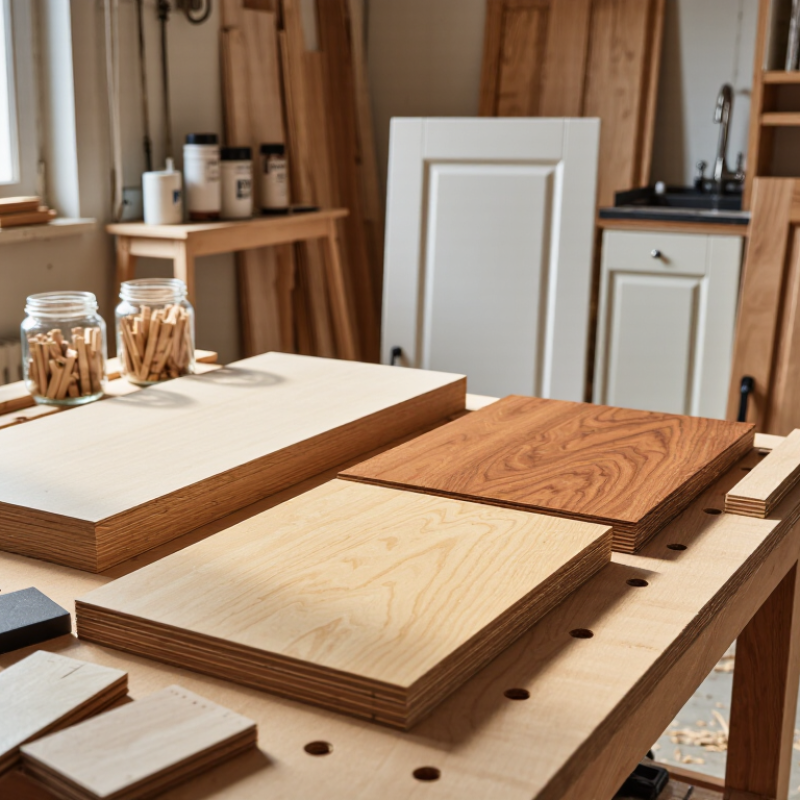
Experienced cabinetmakers usually inspect the panel edge first. Clean, tight plies suggest better manufacturing control. Small gaps may become visible after cutting, routing, or painting. The face veneer also deserves close attention. Look for balanced grain, consistent color, and repairs that will not telegraph through a clear finish. Hold a sample under strong side light. Defects become easier to notice.

Core construction matters greatly. Birch, maple, and hardwood plywood can provide strength and stable machining, while some lightweight panels suit less demanding furniture. Moisture-resistant adhesive may help in humid rooms, but it does not make plywood waterproof. That distinction is often overlooked. It is not flawless.

Reliable suppliers should provide species information, thickness tolerance, emission data, and applicable grading details. Third-party certifications can support responsible sourcing, yet paperwork should never replace physical inspection. Ask for a sample before ordering full sheets. Check warping on a flat surface, measure thickness at several points, and test how the edge reacts to sanding. These simple steps reflect practical experience and reduce expensive surprises.

The right Furniture Grade Plywood is therefore a balanced decision. Appearance, structural performance, health considerations, origin, and budget must work together. Some compromises will remain. The important question is whether each compromise is understood before the saw starts.
How to Choose Furniture Grade Plywood in 2026?

What Furniture Grade Plywood Is and How It Differs from Other Panels

How to Choose Furniture Grade Plywood in 2026?

Furniture grade plywood is made for visible, durable interior work. It usually has smooth face veneers, consistent thickness, and fewer open defects. Its layered structure resists warping better than solid wood in changing indoor humidity. The core matters too. A tight, void-free core supports clean edges, screws, and polished finishes. Construction plywood may look similar, but it often contains rougher faces, more patches, and larger internal gaps. Those flaws can appear after cutting. They may also weaken narrow shelves or cabinet joints.

Compared with MDF, plywood offers better screw holding and lower weight. MDF has a very smooth surface, but its edges can crumble without careful sealing. Particleboard costs less, yet it is less resistant to moisture and repeated assembly. Veneered panels add a real-wood surface, but their core may vary widely. Check the panel’s thickness, formaldehyde compliance, moisture rating, and intended interior use. Ask for a cut sample when possible. I once trusted a flawless face and ignored the core. That was a costly lesson.

Tips: Tap the panel edges and inspect exposed layers. Look for even plies, minimal gaps, and no soft spots. Hold a long sheet flat to detect bowing. Match the veneer direction to the furniture design. Use a sharp blade, because chipped edges can ruin an otherwise refined piece. No panel is perfect. Even premium plywood may need edge banding, sanding, and sealing.

How to Choose Furniture Grade Plywood in 2026?

What Furniture Grade Plywood Is and How It Differs from Other Panels

Furniture grade plywood is a layered wood panel made by bonding thin wood veneers with alternating grain directions. Its cross-laminated structure generally provides a strong balance of stiffness, dimensional stability, screw-holding ability, and lower weight than many wood-based panels.

The chart compares typical density ranges for commonly used panel materials. Actual values vary by wood species, panel construction, moisture content, thickness, and manufacturing standard. Choose plywood when strength, visible veneer quality, and reliable fastener performance are important; MDF or particleboard may be more suitable when a smooth painted surface and cost efficiency are the main priorities.

How to Evaluate Plywood Grades, Veneers, Cores, and Surface Quality

Furniture-grade plywood is not a single grade; it combines appearance, core integrity, and surface performance. When evaluating a panel, read the grade designation, not just the seller’s description. ANSI/HPVA HP-1 connects hardwood plywood grades with face appearance, repairs, and manufacturing quality. An attractive face can still conceal open core gaps or weak bonding. Inspect the edge under bright, angled light. Look for tight plies, consistent thickness, and no dark voids. Grade matters.

Veneer selection affects both appearance and durability. Book-matched faces can look refined, but mismatched grain may reveal uneven sanding or poor layup. Ask whether the face veneer is rotary-cut, sliced, or reconstituted. Each method changes grain character and waste behavior.

The 2021 USDA Forest Products Laboratory Wood Handbook reports typical indoor equilibrium moisture near 6–8%. Store panels flat, then measure moisture with a calibrated pin meter. A dry room does not guarantee a stable panel. Core construction deserves equal scrutiny. A balanced, cross-layered core usually resists twisting better than a visibly uneven core. Still, “usually” is not “always.”

Surface quality requires touch, light, and a small test. Drag fingertips across the face; raised patches often indicate poor sanding or swelling. View the panel at a low angle to expose ripples, glue marks, and filled defects. Check cut edges, because a flawless face can hide internal gaps. Use a straightedge and caliper across several points, not one convenient corner. Reject panels with severe bowing, edge damage, or inconsistent thickness. That step feels excessive. It is cheaper than rebuilding a cabinet. Record the grade, moisture reading, thickness, and inspection date. Those notes make the purchase defensible when visual judgment proves wrong.

How to Match Plywood Specifications with Furniture Design Requirements

How to Choose Furniture Grade Plywood in 2026?

How to Match Plywood Specifications with Furniture Design Requirements

Furniture design should guide plywood selection, not the other way around. Start with the expected load, span, edge exposure, and surface finish. Use thicker panels for shelves, benches, and wide cabinet sides. A stable multi-layer core helps reduce bending. For curved parts, choose plywood designed for controlled flexibility. Do not assume every “furniture grade” panel has the same performance.

Check the veneer quality under the planned finish. Clear coating needs a clean, consistent face. Painted furniture may tolerate minor color variation, but open defects still require filling. Select moisture-resistant panels for kitchens, bathrooms, and humid climates. Moisture resistance is not waterproofing. Confirm thickness tolerance, core gaps, bonding classification, and indoor air-emission documentation from reliable technical sheets.

Tips: Make a small prototype first. Load it realistically. Inspect screw holding, edge splitting, and visible warping after several days. Ask for samples from the same production batch when appearance matters. A 18-millimeter panel may suit a cabinet side, while a 12-millimeter panel could work for a lightly loaded drawer bottom. These are starting points, not universal rules.

In my workshop experience, designers sometimes specify surface beauty before structural behavior. That mistake becomes expensive after assembly. I also find that cut edges reveal problems hidden by a polished face. Review the design twice: once for appearance, and again for movement, fastening, and long-term use. Even careful choices can fail when supports are spaced too far apart.

How to Choose Furniture Grade Plywood in 2026? - How to Match Plywood Specifications with Furniture Design Requirements

Furniture Design Requirement Recommended Plywood Specification Typical Thickness Face and Back Grade Core Construction Moisture and Bonding Requirement Key Selection Considerations
Premium visible surfaces Furniture-grade hardwood plywood with a smooth, sliced or rotary-cut decorative veneer 6–19 mm AA, AB or equivalent; low patching, tight joints and consistent color Multi-ply hardwood or stable composite core with balanced construction Interior dry-use bonding; verify low-emission compliance where required Choose veneer species, grain direction and panel matching to suit the furniture style. Inspect both sides if the panel will be used for open shelving or cabinet doors.
Painted cabinet doors and drawer fronts Smooth-sanded plywood with a uniform face, minimal core telegraphing and good edge quality 12–19 mm A-grade face or paint-grade face; avoid open defects and loose knots Fine, uniform veneer layers or a stable hardwood core Use a suitable primer and sealer; select interior-grade panels for dry rooms Avoid excessive face repairs that may absorb paint differently. Sanding should not expose the next veneer layer.
Cabinet carcasses and wardrobes Stable multi-ply plywood with consistent thickness and accurately machined edges 15–18 mm AB, BB or equivalent depending on whether the surface is exposed Balanced cross-laminated veneers to reduce cupping and twisting Interior dry-use panel; edge sealing is recommended near sinks or floor-level areas Check screw-holding strength, panel flatness and compatibility with the selected edge banding or veneer tape.
Open bookshelves and long shelves High-stiffness plywood with sufficient thickness or an engineered front edge 18–25 mm AA–BB depending on visibility and finishing method Multi-ply hardwood construction; more plies generally provide stable edge appearance Interior-grade bonding is normally adequate for dry interiors Thickness, shelf depth, span and supported load must be considered together. A thicker panel or front-edge stiffener reduces deflection.
Dining tables and desktops Flat, balanced plywood panel with a durable decorative surface or a veneer suitable for clear finishing 18–30 mm AA or AB for clear finishes; paint-grade face for opaque finishes Balanced cross-banded core with low risk of warp Use a moisture-resistant coating system on all faces and edges when occasional spills are expected Seal both sides as evenly as possible. Design the base to support the panel without restricting normal seasonal movement of the finish system.
Chairs, benches and load-bearing components Structural-quality plywood with verified bending strength and reliable glue-line performance 12–25 mm Grade selected according to visibility; surface appearance is secondary to structural consistency Cross-laminated hardwood or other engineered structural core Use a panel classified for the intended service environment; protect cut edges Confirm design loads, fastener spacing, edge distances and bending requirements. Furniture-grade appearance alone does not establish structural capacity.
Bent or curved furniture parts Bending plywood or thin-ply laminated construction designed for the required curve radius 3–12 mm per layer or finished thickness as engineered Flexible face veneer or decorative outer veneer applied after forming Thin veneers with grain direction arranged for bending performance Use adhesive and pressing conditions compatible with the forming process Confirm minimum bend radius, grain orientation, spring-back behavior and whether the finished part needs additional reinforcement.
Bathroom, kitchen and utility-room furniture Moisture-resistant plywood suitable for intermittent humidity and splash exposure 12–19 mm AB or better for exposed decorative surfaces; sealed edges are essential Stable hardwood or other water-resistant engineered core Look for an exterior or moisture-resistant bonding classification appropriate to the application; do not leave edges unsealed Moisture-resistant plywood is not automatically waterproof. Use protective coatings, raised plinths and ventilation where practical.
Outdoor or sheltered furniture Exterior plywood manufactured for prolonged humidity or weather exposure 12–25 mm Exterior-rated face suitable for the planned coating system Durable, fully bonded veneers with low risk of core gaps Exterior bonding classification; all faces, edges and penetrations must be protected with a suitable exterior finish Furniture-grade appearance does not replace exterior durability. Design drainage, avoid water traps and maintain the coating periodically.
Childcare, bedroom and indoor living furniture Interior plywood with documented formaldehyde-emission compliance for the destination market 6–19 mm Low-defect face appropriate for the selected finish Stable, low-emission core with consistent bonding Request current test documentation; examples include TSCA Title VI or CARB Phase 2 requirements in the United States Emission limits and labeling rules vary by jurisdiction. Verify the applicable regulation before purchasing or importing panels.
Visible plywood edges and exposed joinery Panel with attractive, consistent veneer layers and minimal core voids 15–25 mm Face grade selected for the surface; edge appearance depends mainly on core quality Many evenly spaced plies with clean, tightly bonded edges Interior or moisture-resistant bonding according to location Inspect the edge for voids, overlaps and uneven ply thickness. A clear finish can highlight natural variation and repairs.
CNC-cut furniture components Uniform-thickness plywood with a stable core and predictable machining behavior 6–25 mm Grade based on the final visible surface and cutting layout Low-void multi-ply construction reduces tear-out and weak points Select adhesive performance for the service environment; seal freshly machined edges Confirm sheet thickness tolerance, grain direction, tool settings and nesting orientation before production.

Reference note: Thickness ranges are common furniture-design starting points, not universal rules. Final selection should be verified against the project load, span, joint design, service environment, applicable plywood standard and local formaldehyde-emission regulations.

How to Check Moisture Resistance, Safety Standards, and Sustainability

Choosing furniture-grade plywood in 2026 requires more than inspecting a smooth surface. Moisture resistance starts with the panel’s bond classification and core quality. Ask for EN 314-2 bonding results or equivalent test evidence. Use a calibrated moisture meter on several points, including edges. A practical indoor target is often 6–10%, but local climate and supplier specifications matter. A panel can look dry while its inner plies remain unstable. I have learned not to trust one reading.

Safety documentation should identify formaldehyde emissions, not merely state “low emission.” The U.S. EPA’s TSCA Title VI limits hardwood plywood emissions to 0.05 ppm under its specified test method. Request a current laboratory report, production certification, and test standard. Check sealed edges, because exposed end grain absorbs water quickly. Even excellent plywood can fail when installed beside a sink without proper finishing.

Sustainability needs evidence, too. The FAO Global Forest Resources Assessment 2020 reported a 178 million-hectare net forest loss from 1990 to 2020, although the rate of loss declined substantially. Ask for verifiable chain-of-custody documentation, recycled-fiber details, and an Environmental Product Declaration when available. Compare veneer thickness, service life, and repairability, not just recycled content. I still find sustainability claims difficult to compare. That uncertainty deserves honest disclosure. A responsible specification records the wood species, origin, adhesive class, emissions result, moisture data, and expected use conditions.

How to Compare Suppliers, Costs, and Long-Term Value in 2026

How to Choose Furniture Grade Plywood in 2026?

Supplier comparison should begin with documents, not attractive photographs. Ask for veneer species, core construction, thickness tolerance, formaldehyde class, and test reports.

USDA Forest Products Laboratory’s Wood Handbook explains that moisture changes can cause swelling, shrinkage, and surface cracking in wood panels. Therefore, inspect storage conditions. A damp warehouse can quietly reduce value before installation.

Price needs a wider calculation. Compare delivered cost, usable sheet area, rejected panels, machining time, and finishing requirements.

The U.S. Bureau of Labor Statistics’ Producer Price Index tracks continuing volatility across wood products, so a low quotation may not remain low after transport and cutting. Request quotes with identical specifications. Otherwise, the comparison is weak.

Long-term value also includes responsible sourcing and indoor air quality.

The Food and Agriculture Organization’s Global Forest Resources Assessment 2020 reports that forests cover about 31 percent of global land area, while pressure on forest resources remains significant. Ask suppliers for chain-of-custody evidence and current emissions documentation.

I would also test a sample panel: check edge voids, veneer alignment, screw holding, and odor after one week indoors. Laboratory data matters, but small samples can mislead. That limitation deserves attention.

A slightly higher-grade panel may cost less when fewer sheets warp, delaminate, or require replacement.

bottom of page