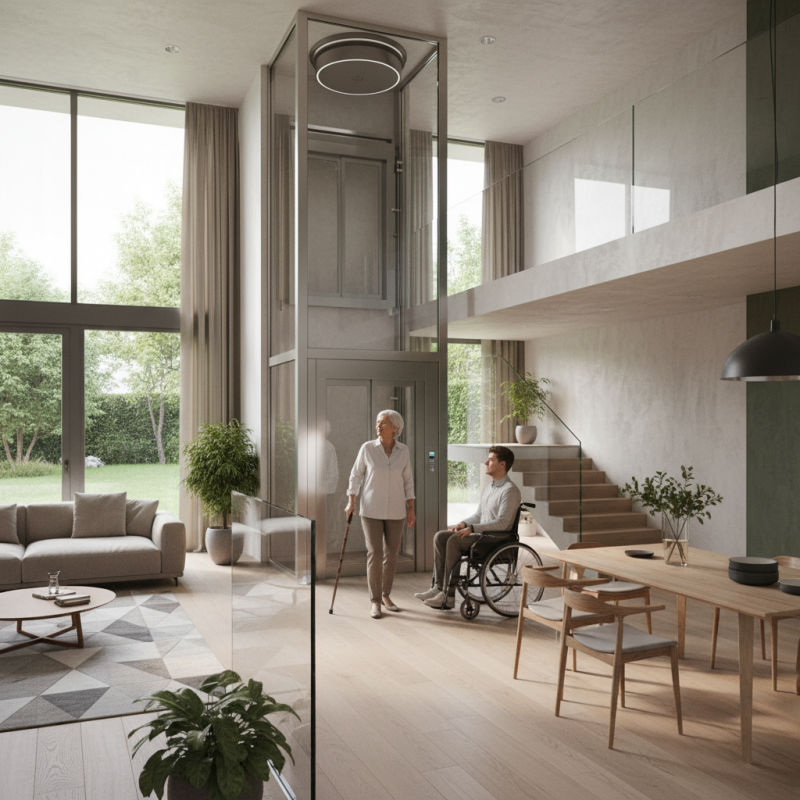
How to Choose the Right Home Elevator for Your Needs?
Choosing the right Home Elevator can seem daunting. Many factors play a role in this decision. A home elevator is more than just a convenience; it greatly enhances mobility and accessibility.
Start by assessing your specific needs. Consider the size of your home, the number of stories, and the space available. Elevators can vary greatly in design and functionality. There are hydraulic lifts, cable-driven models, and vacuum elevators. Each type has its pros and cons. Researching these options will help clarify your choices.
Remember, installation can be disruptive and costly. Ensure you factor in maintenance as well. Sometimes, people overlook the long-term requirements. It’s crucial to envision how the elevator will fit into your daily life. Think about who will use it and how often. Your home elevator should not only meet your needs but also enhance your lifestyle.
Factors to Consider When Choosing a Home Elevator
Choosing the right home elevator requires careful thought. Consider your space. Measure the dimensions of your home. Think about where the elevator will fit. Space constraints can limit your options. A compact design may save room, but it might be less comfortable. Reflect on your mobility needs. Are you planning for future changes in mobility?
Accessibility is crucial. Will the elevator accommodate a wheelchair? Or is it just for carrying heavy items? Assess the weight capacity. This detail is often overlooked. Safety features should also be a priority. Look for options with sensors and emergency systems.
Tips: Prioritize user-friendliness. Controls should be easy to reach. Lighting inside the elevator enhances visibility. Consider noise levels too. A quiet elevator is always a plus. Test how smoothly it operates. Some may be slower than expected. Take your time to explore all available options. Don’t rush this decision.
Types of Home Elevators and Their Suitable Applications
When selecting a home elevator, understanding the types available is crucial. There are mainly three types: hydraulic, traction, and pneumatic elevators. Hydraulic elevators are ideal for low-rise buildings, typically up to three stories. They are reliable and require less maintenance but can be costly to install. Traction elevators are more energy-efficient and suitable for taller homes. They provide a smoother ride and have options for high-speed operations. Pneumatic elevators, on the other hand, use air pressure to move between floors. They are compact and require minimal installation space, making them ideal for homes with limited floor area.
Tips: When choosing, consider the architectural constraints of your home. Hydraulic elevators need more room for the pit and machine space. Check door widths as well, especially if you have large mobility equipment.
According to recent industry reports, the market for home elevators is booming, expected to grow at a CAGR of 8% through 2028. Many homeowners are focusing on both functionality and aesthetics. Budget constraints also play a significant role in the decision-making process. It’s important to balance cost with the features most suitable for your unique needs. Sometimes, opting for a simpler model may actually serve better long-term.
Assessing Your Space and Structural Requirements
When assessing your space for a home elevator, begin with measurements. Consider the dimensions of your staircase or the proposed location. A standard elevator requires a minimum of 5 feet by 5 feet for a safe fit. Think about the ceiling height, too. If you have lower ceilings, a shaftless design might be necessary. Evaluate potential obstructions like beams or ductwork that could complicate installation.
Structural requirements also play a critical role. You need to ensure the building can support the added weight of the elevator. Consult a structural engineer if unsure. Not all homes are ideal for every type of elevator. An exterior elevator might be more suitable for some properties.
Consider the overall layout. Circulation space around the elevator is crucial. A door swing that conflicts with a wall could lead to problems. Check for potential issues like uneven flooring or steep slopes. Reflect on how often you will use the elevator. Is it for groceries or mobility? Each scenario has its considerations that impact design choices.
Budgeting for Your Home Elevator Installation and Maintenance
When budgeting for a home elevator installation, consider various costs. A basic model can start around $10,000. However, more advanced systems can exceed $50,000. According to industry reports, installation often ranges from $5,000 to $15,000. Prices vary by design, capacity, and technology.
Maintenance shouldn’t be overlooked. Regular maintenance costs can be between $250 and $500 annually. This ensures the elevator functions safely and efficiently. Remember, neglecting maintenance can lead to higher repair costs later. Many homeowners don’t account for this ongoing expense.
Think about energy consumption too. Elevators can add to your electricity bill. Some systems are more energy-efficient than others. You might save in the long run by choosing wisely. Factor this into your budget. Use industry data to project long-term costs. Balancing initial investment with ongoing expenses is crucial for making a smart choice.
Safety Features and Technology in Modern Home Elevators
When choosing a home elevator, safety features are paramount. Modern home elevators are equipped with advanced technology to ensure user safety. These include emergency stop buttons and backup power systems. Many elevators now also have sensors that detect obstacles, preventing accidents.
A key feature is the door interlock system. This prevents doors from opening while the elevator is moving. Furthermore, soft-start technology allows for smoother acceleration and deceleration. This reduces the risk of falls. It’s essential to consider these features carefully to enhance safety at home.
However, not all elevators are created equal. Some may lack critical safety elements. Research is crucial. Assessing your specific needs and the technology available is part of the decision-making process. Don't rush this choice; it impacts daily life and safety. Always seek information and consult professionals when needed. Balancing safety and convenience can be challenging but necessary for a comfortable home.
How to Choose the Right Home Elevator for Your Needs? - Safety Features and Technology in Modern Home Elevators
| Feature | Description | Importance |
| Overload Sensors | Detects when the elevator is overloaded and prevents it from operating. | High - Prevents accidents and structural damage. |
| Emergency Stop Button | Allows passengers to stop the elevator immediately in case of emergency. | High - Essential for passenger safety. |
| Automatic Door Sensors | Prevents doors from closing if an object is detected in the way. | Medium - Reduces risk of injury. |
| Battery Backup | Ensures the elevator works during power outages. | High - Critical for uninterrupted service. |
| Intercom System | Allows communication with individuals outside the elevator. | Medium - Enhances safety in case of emergencies. |
| Smooth Start and Stop Mechanism | Provides a comfortable ride by eliminating sudden movements. | High - Improves user experience. |