top of page

How to Source Glucosamine Sulfate Potassium Chloride?

Sourcing Glucosamine Sulfate Potassium Chloride requires more than comparing prices from online supplier lists. The material’s identity, purity, stability, and documentation should match the intended application. A reliable sourcing process begins with a clear technical specification, including assay, moisture, particle size, packaging, and storage conditions.

Experienced purchasing teams usually request a current Certificate of Analysis, Safety Data Sheet, manufacturing license, and batch traceability records. They also examine whether the supplier operates under suitable quality systems, such as GMP-based controls. A small sample can reveal practical issues, including unusual odor, poor flow, or damaged inner bags. These details matter.

Ask about origin and production capacity. Confirm the exact chemical form.

Glucosamine Sulfate Potassium Chloride may be supplied for dietary supplement or pharmaceutical-related manufacturing, but requirements vary by market. The supplier should explain testing methods and provide results from qualified laboratories. Independent verification can strengthen confidence when the purchase volume is significant. However, no document replaces careful review.

Some supplier websites appear professional but offer limited technical evidence. That is a warning sign. Buyers should compare documents, communication quality, lead times, and complaint procedures before approval. It is also wise to evaluate transport conditions, pallet protection, and lot consistency. A low quotation may hide higher inspection or replacement costs.

This guide presents a practical framework for finding capable suppliers and reducing avoidable sourcing risks. It also recognizes an uncomfortable truth: even a well-screened supplier may require ongoing monitoring. Specifications can change, and assumptions can become outdated. Careful records, periodic testing, and direct communication help maintain dependable quality over time.
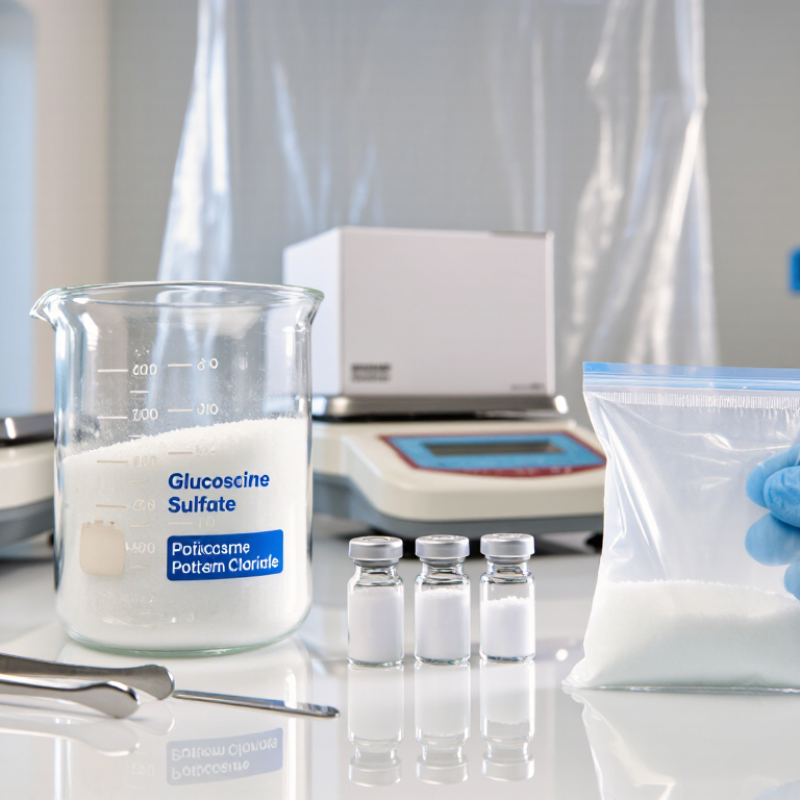
How to Source Glucosamine Sulfate Potassium Chloride?

What Is Glucosamine Sulfate Potassium Chloride?

How to Source Glucosamine Sulfate Potassium Chloride?

Glucosamine sulfate potassium chloride is a defined salt complex, not simply glucosamine mixed with potassium chloride. The sulfate portion provides the active salt structure, while potassium chloride helps stabilize the material during manufacturing and storage. It usually appears as a white crystalline powder. The chemistry sounds simple, but the assay can be misunderstood.

Reliable sourcing begins with identity testing. Request the specification, certificate of analysis, chromatographic results, moisture level, and residual solvent data. Confirm glucosamine content separately from sulfate and potassium content. Heavy-metal and microbiological limits also matter. The European Pharmacopoeia and United States Pharmacopeia provide useful quality-control frameworks, although commercial specifications may differ.

Market data shows why documentation is important. Grand View Research valued the global glucosamine market at more than USD 1 billion in 2023, reflecting strong demand for joint-health ingredients. However, market size does not prove product quality. NIH fact sheets also describe mixed evidence for glucosamine’s clinical benefits, so responsible sourcing should avoid exaggerated claims. Ask whether the material is manufactured under GMP conditions and whether each batch is traceable to raw-material records. Some suppliers provide impressive numbers but weak supporting documents. That deserves caution. A practical mistake is accepting a generic “glucosamine sulfate” label without confirming the potassium chloride form, assay basis, and water content.

How to Identify Product Specifications and Quality Standards

Sourcing glucosamine sulfate potassium chloride requires more than comparing price and assay claims. Grand View Research estimated the global glucosamine market at about USD 1.1 billion in 2023, with a projected 5.8% CAGR through 2030. That growth increases the risk of inconsistent specifications. Request the exact chemical identity, CAS number, molecular formula, assay basis, sulfate content, potassium content, chloride content, water, particle size, and packaging conditions. Do not accept “pharmaceutical grade” without a defined standard.

A reliable specification should include lot-specific testing. Ask for HPLC or ion chromatography results, heavy-metal limits, microbial testing, residual solvents, and stability data. Methods should be validated under ICH Q2(R2), while the laboratory should preferably hold ISO/IEC 17025 accreditation.

Manufacturing records should demonstrate compliance with applicable GMP requirements, such as 21 CFR Part 111 for dietary supplements. USP and Ph. Eur. references may support testing where relevant, but they do not replace a complete product specification. A clean-looking white powder proves very little.

Tips: Compare three recent certificates of analysis, not one sample. Confirm the test date, lot number, analyst approval, and laboratory identity. Check whether the assay is reported on an anhydrous basis. My own checklist still has a blind spot: supplier documents can look complete while missing impurity trend data. Ask for three-lot consistency results, stability at actual storage conditions, and a retained sample for independent verification. Insist on sealed, moisture-resistant packaging. Sodium content is also worth checking when the material enters a low-sodium formulation.

Where to Find Qualified Glucosamine Sulfate Suppliers

How to Source Glucosamine Sulfate Potassium Chloride?

Finding qualified glucosamine sulfate potassium chloride suppliers requires more than comparing prices. Start by checking manufacturing experience, documented quality systems, and product consistency across several batches. A reliable supplier should provide a current certificate of analysis, specification sheet, safety data sheet, and clear batch traceability. Review the stated glucosamine content, potassium chloride level, moisture, impurities, and microbiological limits. Small details matter.

Ask where the material is manufactured and whether production follows recognized good manufacturing practices. Request recent third-party test reports, not only internal laboratory results. Identity testing, assay verification, heavy metal screening, and stability data can reveal weaknesses hidden by attractive quotations. Samples should match the proposed commercial specification. Keep the sample, seal, and documents together for later comparison.

I prefer suppliers that answer technical questions directly. Delayed replies can signal weak support, although this is not always true. A remote audit may confirm process controls, cleaning records, calibration practices, and storage conditions. Check packaging carefully; moisture-sensitive material needs suitable protection and labeled lot numbers. Confirm lead times and change-notification procedures in writing. No checklist is perfect. Supplier qualification should remain an ongoing review, especially after changes in raw materials, equipment, or production sites.

How to Source Glucosamine Sulfate Potassium Chloride?

Theoretical Elemental Profile for Supplier Identity Verification

The chart shows the theoretical mass contribution of each element in glucosamine sulfate potassium chloride, based on the commonly referenced molecular formula C12H28Cl2K2N2O14S and a calculated molecular mass of approximately 605.5 g/mol. Qualified suppliers should provide a current certificate of analysis, identity testing, assay results, impurity data, and batch traceability that are consistent with the agreed pharmacopeial or customer specification.

How to Evaluate Supplier Credentials and Product Documents

Sourcing glucosamine sulfate potassium chloride requires more than comparing prices. Supplier credentials should show a real, traceable operation. Request the legal company name, manufacturing address, quality certifications, and current production scope. Check whether certificates match the actual facility, not only a sales office.

Product documents deserve close attention. Ask for a specification sheet, recent certificate of analysis, safety data sheet, and manufacturing flow description. The certificate should identify the exact lot, production date, test methods, and authorized reviewer. Check assay, identity, moisture, chloride, potassium, microbiological limits, heavy metals, and residual solvents when relevant. Documents without method references are weak evidence. Dates matter.

I also request batch traceability from raw materials to packed containers. Review packaging photos, label details, storage conditions, and transport controls. A reliable supplier should explain deviations, complaints, recalls, and change notifications clearly. Ask for a sample before approval. Then compare its appearance, documentation, and test results with the agreed specification.

I once treated a polished certificate as sufficient evidence. That was a mistake.

Independent laboratory testing may still be necessary, especially for a new supplier or unusual result. Keep communication records and version-controlled documents. Good paperwork cannot replace technical judgment.

How to Compare Pricing, Samples, and Purchase Terms

How to Compare Pricing, Samples, and Purchase Terms

When sourcing glucosamine sulfate potassium chloride, compare more than the quoted price per kilogram. In practice, a lower offer may exclude testing, special packaging, or transport. Ask each supplier for a dated quotation with grade, assay, moisture limits, shelf life, and minimum order quantity. Request the specification sheet and certificate of analysis for the same production lot. Check whether the test method is clearly identified. Vague data deserves questions.

Samples should represent commercial material, not a carefully selected laboratory portion. Request enough sample for identity, purity, moisture, microbiological, and stability checks. Record the lot number, packaging condition, and delivery date. A sealed bag with a clear label is useful evidence. Test it through a qualified laboratory when the purchase is significant. Do not rely only on appearance. White powder is not proof of quality.

Purchase terms can change the real cost. Compare lead time, payment schedule, delivery terms, insurance, and responsibility for customs documents. Confirm how the supplier handles rejected material, damaged cartons, and specification failures. Ask whether the price remains valid for thirty days or changes with raw material costs. Small details matter. I have seen buyers focus on unit price and overlook a long lead time. That mistake can interrupt production. My own comparison sheets are never perfect, so I recheck every assumption before approving an order.

bottom of page