Top Vibration Equipment Manufacturers for Global Buyers
Choosing the right Vibration Equipment manufacturer can shape production quality, maintenance costs, and workplace reliability. Global buyers need more than attractive catalogs or impressive factory photographs. They should examine engineering experience, product testing, technical documentation, and after-sales support. A dependable manufacturer explains frequency ranges, load limits, motor specifications, noise levels, and expected service life clearly.
Real-world performance matters. A vibrating screen used in mining faces different demands from a laboratory shaker or pharmaceutical feeder. Buyers should compare equipment materials, control systems, installation requirements, and replacement-part availability. Factory audits, sample testing, and verified customer references can reveal details that marketing pages often omit. Even a small issue, such as an unsuitable mounting bolt, may create vibration transfer, excessive noise, or unexpected downtime.
No supplier is perfect. That deserves attention. Some manufacturers provide excellent machines but limited local support. Others offer fast communication but weak documentation. This guide examines leading global manufacturers through practical criteria, including product range, customization ability, certifications, quality control, delivery experience, and technical assistance. The goal is not to praise the largest names automatically. It is to help buyers identify reliable partners for specific operating conditions, budgets, and compliance expectations. Careful comparison remains essential, because the best Vibration Equipment supplier is not always the cheapest or most famous option.
Vibration Equipment: Definition, Types, and Industrial Applications
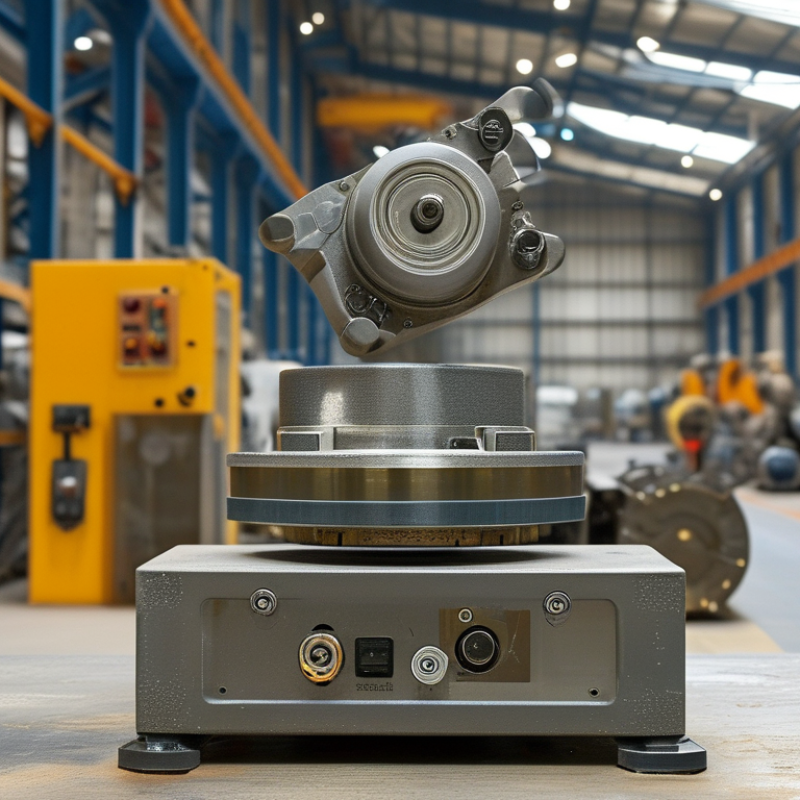
Vibration equipment creates, controls, or measures mechanical oscillation for a specific industrial purpose. Its movement may be gentle, rapid, linear, or circular. Engineers select equipment by frequency, amplitude, load capacity, and operating environment. These details affect performance and worker safety.
Common types include vibratory feeders, screening machines, compactors, shakers, and vibration monitoring instruments. Feeders move parts through production lines with steady pulses. Screens separate minerals, grains, or recycled materials by particle size. Compactors reduce air gaps in soil, concrete, and asphalt. Shaker systems test products against transport vibration. Sensors detect unusual movement in motors, pumps, and rotating assemblies.
Applications vary across mining, construction, food processing, packaging, automotive production, and aerospace testing. A quarry may use a vibrating screen beside a dusty conveyor. A factory may use sensors to identify bearing wear before a motor fails. Proper installation matters. Loose mounting can create misleading readings and excessive noise. Calibration also requires regular attention, especially in demanding environments. Not every vibration problem needs stronger equipment. Sometimes, poor alignment causes the real damage. That detail is easy to miss. Operators should review maintenance records, material properties, and local operating conditions before choosing a system. Performance claims still need practical verification.
Key Criteria for Evaluating Global Vibration Equipment Manufacturers
Top Vibration Equipment Manufacturers for Global Buyers
Global buyers should evaluate vibration equipment manufacturers through evidence, not polished catalogs. Product claims need technical support, test records, and clear operating limits. Check frequency range, vibration amplitude, load capacity, duty cycle, and temperature tolerance. These details reveal whether equipment suits a laboratory, production line, or harsh outdoor site.
An experienced evaluator also examines manufacturing consistency. Ask how each unit is calibrated, inspected, and traced before shipment. Reliable manufacturers provide serial-based records, readable manuals, electrical specifications, and replacement-part guidance. Independent testing or recognized quality certifications can strengthen confidence, but paperwork alone proves little. Factory videos may look convincing. They are not technical evidence.
After-sales capability matters across borders. Confirm response times, remote diagnostics, local service coverage, warranty terms, and spare-parts availability. Check voltage compatibility and connector standards before ordering. A strong supplier explains installation limits without hiding inconvenient details. In practice, I have seen buyers focus on purchase price and overlook transport vibration, noise, or maintenance access. That mistake can increase downtime later. One more practical test helps: request a sample report from a comparable project. If the manufacturer avoids precise answers, treat that uncertainty seriously. Even careful evaluations can miss field conditions. Real performance sometimes differs from controlled testing.
Leading Manufacturer Categories by Technology and Product Specialty
Global buyers should classify vibration equipment by technology before comparing manufacturers.
Electrodynamic shakers suit electronics, aerospace, and automotive qualification because they provide precise frequency control. Hydraulic systems deliver higher force for large structures and heavy industrial testing. Mechanical shakers remain practical for simpler, lower-cost applications.
Product specialty creates another useful division. Vibration monitoring manufacturers focus on accelerometers, velocity sensors, wireless nodes, and analysis software. Screening and conveying specialists build vibrating screens, feeders, and compactors for mining, recycling, food processing, and construction.
According to Grand View Research, the global vibration monitoring market is projected to grow at about 7% annually through 2030. MarketsandMarkets also identifies predictive maintenance as a major demand driver.
These figures support stronger interest in connected equipment, but market forecasts are not purchase guarantees. That distinction matters.
Tips: Match force, frequency range, payload, and duty cycle before requesting quotations. Ask for calibration records, IP ratings, spare-part lead times, and regional service coverage.
A wireless sensor may reduce installation work, yet battery replacement can become an overlooked operating cost. Buyers should also request test data under realistic loads, not only laboratory results. The classification is helpful, but not perfect. Some manufacturers combine monitoring, testing, and process equipment, making direct comparisons difficult. A careful technical review usually exposes those gaps.
Quality Standards, Customization, and International Compliance
Top Vibration Equipment Manufacturers for Global Buyers
Quality Standards, Customization, and International Compliance
Global buyers should examine quality systems before comparing prices. A reliable manufacturer can provide inspection records, material certificates, and traceable production data. ISO 9001-based procedures often indicate controlled processes, but certification alone proves little. Ask how suppliers manage calibration, nonconforming parts, and final testing.
Paperwork matters. Performance matters more. Request vibration measurements under defined loads, frequencies, and operating temperatures. Test reports should identify equipment models, test dates, instruments, and acceptance limits. Clear data helps engineers compare suppliers without relying on attractive claims. It also exposes weak testing practices early.
Customization requires more than changing dimensions. Mounting patterns, enclosure ratings, noise limits, control interfaces, and local power requirements may affect the entire design. Experienced manufacturers should review drawings and explain possible trade-offs. A custom solution can still fail if installation conditions are misunderstood. That is a useful reminder for every purchasing team.
International compliance must be checked for the destination market, not assumed from one certificate. Buyers may need conformity documents, electrical safety evidence, electromagnetic compatibility testing, labeling, manuals, and language-specific warnings. Import requirements can also differ by country. Confirm responsibilities in writing before production begins. No checklist is perfect. Independent pre-shipment inspection remains valuable, especially for first orders, unusual specifications, or tight delivery schedules.
Purchasing, Shipping, and After-Sales Support for Global Buyers
Buying vibration equipment for international projects requires more than comparing catalog prices. Confirm the required frequency range, amplitude, load capacity, deck size, and operating environment. Ask for test data, calibration records, drawings, and a clear quotation. A reliable manufacturer should explain technical limits in plain language. This matters when equipment will support product testing, material research, or production inspection.
Shipping details can affect the project schedule as much as machine performance. Request reinforced export packaging, moisture protection, shock indicators, and a photographed packing record. Confirm the equipment weight, crate dimensions, shipping method, delivery terms, and customs documents before payment. Commercial invoices, packing lists, certificates of origin, and user manuals should match the order precisely. Small document errors can delay a crate at the port.
After-sales support should be agreed in writing. Useful services include remote installation guidance, operator training, spare-part identification, and response times for technical questions. Ask whether engineers can review test settings after commissioning. Keep records of vibration readings, maintenance dates, and unusual noise. These details help diagnose problems faster. The process is not always perfect. A delivery may arrive later than planned, or a setting may need adjustment on site. Honest suppliers explain the cause, propose corrective steps, and keep communication active. Global buyers should also verify local safety requirements and electrical compatibility before shipment.
Top Vibration Equipment Manufacturers for Global Buyers - Purchasing, Shipping, and After-Sales Support for Global Buyers
| Manufacturer Profile | Primary Equipment Focus | Typical Buyer Applications | Common Product Range | Purchasing Documentation | Typical Production Lead Time | Common Shipping Terms | Export Packaging | Warranty Practice | After-Sales Support |
|---|---|---|---|---|---|---|---|---|---|
| Profile A Heavy-Duty Screening | Vibrating screens, feeders, scalping screens, grizzly feeders | Aggregates, mining, quarrying, recycling, bulk material handling | Medium to very large industrial units; single- and double-deck configurations | Quotation, technical datasheet, GA drawing, motor data, spare-parts list | Approximately 6–14 weeks, depending on customization and workload | FCA, FOB, CFR, CIF, or DAP by agreement | Steel frame or skid, corrosion protection, moisture-resistant wrapping | Commonly 12 months for manufacturing defects | Remote commissioning, installation manuals, wear-part guidance, troubleshooting |
| Profile B Industrial Separation | Circular vibrating screens, linear screens, dewatering screens | Mineral processing, sand washing, aggregate classification, coal handling | Compact to large screening decks with polyurethane, rubber, or woven-media options | Commercial invoice, packing list, foundation drawing, inspection checklist | Approximately 5–12 weeks for standard configurations | EXW, FCA, FOB, and CIF are frequently used for international orders | Export crate, reinforced base, separate accessories, marked lifting points | Warranty period and exclusions stated in the sales contract | Video support, spare-screen recommendations, operating-parameter guidance |
| Profile C Electromagnetic Feeding | Electromagnetic vibrating feeders, dosing feeders, controlled feed systems | Food processing, pharmaceuticals, chemicals, plastics, light industrial production | Small to medium feeders with adjustable amplitude and variable feed rates | Electrical schematic, control specifications, material-contact declaration, test report | Approximately 4–10 weeks for standard models | Courier or air freight for small units; sea freight for consolidated shipments | Shock-resistant carton or plywood case with desiccant when required | Usually limited by motor, controller, and application conditions | Electrical setup assistance, parameter adjustment, replacement-component support |
| Profile D Vibratory Finishing | Vibratory finishing machines, deburring systems, polishing equipment | Metal components, automotive parts, hardware, precision manufacturing | Bench-top, batch, and continuous-flow machines with optional separation systems | Machine specification, media recommendation, process trial record, spare-parts list | Approximately 4–12 weeks, plus time for process testing | FCA or FOB for machinery; courier delivery for compounds and small accessories | Plywood case or reinforced pallet; machine secured against movement | Typically covers equipment defects, not consumables or process media | Process setup guidance, media selection, remote operator training |
| Profile E Laboratory Testing | Laboratory shakers, sieve shakers, test screens, compact vibration tables | Universities, quality-control laboratories, construction materials, pharmaceuticals | Tabletop and floor-standing units with timed or programmable operation | User manual, calibration information, electrical rating, conformity documents | Approximately 2–8 weeks for catalog equipment | Parcel, air express, or consolidated air freight | Double-wall carton or small plywood case with molded protection | Often 12 months, subject to local distributor or contract terms | User manuals, calibration assistance, remote diagnostics, parts ordering |
| Profile F Compaction and Shaking | Vibration tables, concrete test compactors, mold-shaking equipment | Precast concrete, construction laboratories, packaging, industrial molding | Small laboratory tables to customized industrial platforms | Load data, table dimensions, vibration frequency, amplitude, power requirements | Approximately 4–10 weeks depending on table size and control options | FOB, CFR, CIF, or DAP depending on destination and shipment size | Bolted base, protected control panel, moisture-resistant export wrapping | Coverage generally excludes overload, improper anchoring, and wear components | Installation drawings, anchoring instructions, controller setup assistance |
| Profile G Custom Automation | Custom vibratory conveyors, bowl feeders, linear feeders, sorting systems | Assembly lines, electronics, hardware, medical-device and automotive production | Application-specific systems designed around part geometry and throughput | Layout drawing, cycle-time estimate, risk assessment, FAT/SAT plan, software documentation | Approximately 10–24 weeks for engineered projects | Sea freight for complete systems; air freight for urgent controls or replacement parts | Engineered export crate with labeled modules and lifting instructions | Project-specific warranty linked to commissioning and acceptance terms | Remote commissioning, PLC support, operator training, preventive-maintenance plans |
| Profile H Replacement and Service | Vibration motors, exciters, springs, screen panels, controllers, wear parts | Maintenance departments, plant retrofits, emergency replacement programs | Standard replacement components for common vibration equipment types | Part number, dimensional drawing, compatibility statement, test certificate if applicable | Approximately 3–8 weeks; stock availability should be confirmed before ordering | Courier or air freight is commonly selected for urgent parts | Individual protective packaging, anti-corrosion treatment for metal parts | Usually limited to defects in materials or workmanship | Compatibility checks, installation instructions, failure analysis, parts identification |
Indicative international purchasing reference based on common vibration-equipment procurement practices. Final specifications, lead times, Incoterms, certifications, warranty coverage, and shipping costs should be confirmed in the supplier’s quotation and sales contract.