top of page

China Top 10 Jacquard Guide Board Manufacturers

China’s Jacquard machinery sector supports apparel, upholstery, home textiles, and technical fabrics worldwide. This guide examines China’s Top 10 Jacquard Guide Board Manufacturers through practical purchasing criteria. These criteria include board accuracy, compatibility, material quality, delivery capability, technical support, and quality control.

Industry reports provide useful context. The ITMF International Textile Machinery Statistics track global machinery shipments and show continuing investment in automated weaving equipment. The report also highlights demand for productivity, precision, and flexible production. Textile Exchange’s Materials Market Report shows the growing importance of traceability and material responsibility across textile supply chains. These trends affect component selection, including every Jacquard Guide Board installed inside a production system.

Small parts matter.

A reliable guide board should maintain stable yarn movement under repeated operation. Its surface must resist wear, deformation, and fiber accumulation. Buyers should also confirm dimensions, hole alignment, operating temperature, and compatibility with the target Jacquard machine. ISO-based quality systems can support consistency, but certification alone cannot replace factory inspection. This point is often overlooked.

The manufacturers discussed in this article are assessed using public company information, product evidence, manufacturing experience, export capability, and customer-service signals. However, no ranking is completely universal. Production needs differ between a high-speed weaving mill and a small sampling workshop. Some suppliers may publish limited technical data, making independent verification necessary. Request drawings, samples, inspection records, and realistic lead times before placing an order. A careful comparison can reduce downtime, rejected fabric, and costly replacement cycles.
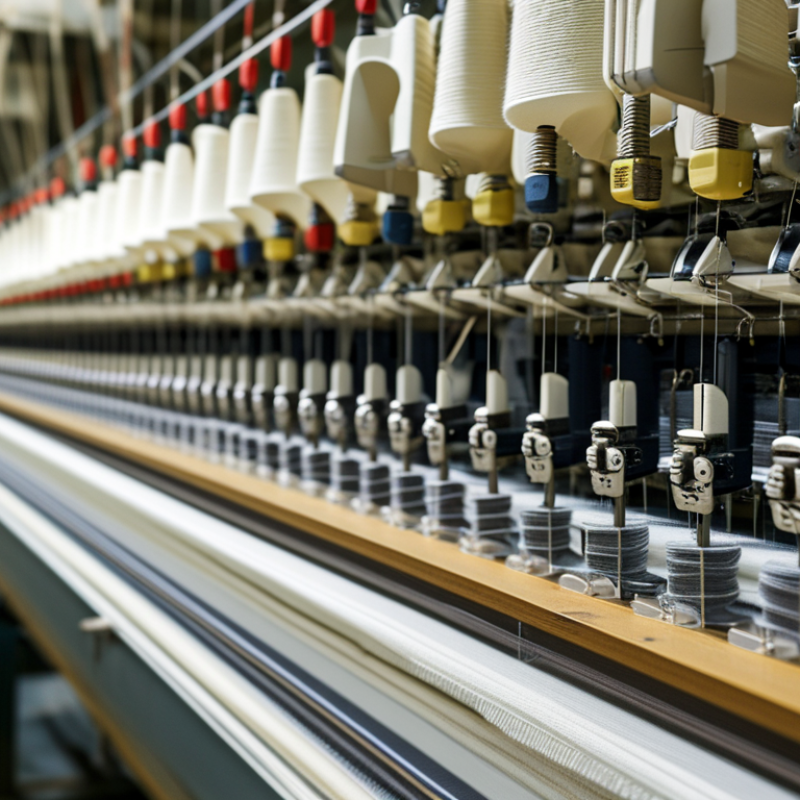
China Top 10 Jacquard Guide Board Manufacturers

Jacquard Guide Boards: Definition, Structure, and Industrial Applications

A jacquard guide board is a precision textile component that directs yarns through controlled positions. It supports accurate pattern formation during weaving or knitting. Small alignment errors can create broken motifs, uneven tension, or visible fabric bars.

Its structure usually includes a rigid base, drilled guide openings, and a mounting frame. Some designs use ceramic, hardened metal, or engineered polymer inserts. These materials reduce abrasion when yarn moves continuously across the surface. The board must remain flat under heat, vibration, and repeated machine cycles. Hole spacing is critical. So is surface smoothness.

In a textile workshop, technicians inspect guide openings under bright light before installation. They check burrs, cracks, edge wear, and alignment with a measuring gauge. Jacquard guide boards serve in decorative fabrics, lace, elastic tapes, automotive textiles, and technical meshes. Different yarn counts require different opening sizes and layouts. A board suitable for fine filament may perform poorly with coarse spun yarn.

Quality cannot be judged by appearance alone. A polished surface may still hide poor dimensional control. That is an easy mistake. Manufacturers should document material grade, tolerance data, inspection methods, and service testing. Long-term reliability also depends on cleaning, correct mounting, and stable yarn tension. In practice, maintenance records often reveal more than a product brochure.

How to Evaluate Jacquard Guide Board Manufacturers in China

China Top 10 Jacquard Guide Board Manufacturers

Evaluating Chinese jacquard guide board manufacturers requires more than comparing prices. Check board material, needle alignment, surface hardness, and dimensional tolerance. Ask for inspection records from each production batch. A stable supplier should provide drawings, sample approvals, and traceability codes. In my early sourcing reviews, I focused too heavily on unit cost. That mistake caused fitting delays.

The 2023 ITMF International Textile Machinery Shipment Statistics reported a 28% decline in new shuttle-less loom shipments. This signals tighter investment decisions across textile manufacturing. Buyers should therefore test guide boards under realistic speed, tension, and yarn conditions. Request a small trial batch before signing a large order. Measure wear after repeated cycles, not only after visual inspection. The China National Bureau of Statistics also reported continued growth in China’s industrial output in 2023, but growth alone does not prove component quality. Supplier evidence matters more.

Tips: Compare at least three factories. Review tolerance charts, hardness results, and defect rates. Confirm packaging for moisture and impact protection. Visit the workshop when possible. A video tour helps, but it cannot replace an audit. Ask whether production records remain available after delivery. Some manufacturers may provide excellent samples but inconsistent volume production. That risk deserves attention.

China’s Top 10 Jacquard Guide Board Manufacturers

China’s Top 10 Jacquard Guide Board Manufacturers are often compared by precision, material control, and production consistency. A reliable manufacturer should understand guide board geometry, yarn tension, and repeated machine movement. Key details include hole diameter, spacing tolerance, edge smoothness, and resistance to abrasion. Boards may use engineered polymers, ceramics, or treated metal parts, depending on the loom and fabric design.

During supplier evaluation, request technical drawings, inspection records, and recent samples. A trial order can reveal problems that brochures hide. Check whether the supplier measures parts with calibrated equipment and records results clearly. Communication also matters. Slow replies may become costly when specifications change. A low quotation is not always a saving; I have seen small tolerance gaps create uneven fabric and extra setup work. Even experienced factories can miss one detail.

Tips: Compare at least three samples under the same conditions. Ask for tolerance data, material certificates, and packaging photos. Confirm whether replacement boards match the original mounting holes. Inspect the surface under bright light for burrs, cracks, or rough polishing. Leave room for improvement. Your first specification may be incomplete, especially after real machine testing. Feedback from operators should influence the final purchase decision.

Product Quality, Technology, and Customization Comparison

China Top 10 Jacquard Guide Board Manufacturers: Product Quality, Technology, and Customization Comparison

A useful top-ten comparison should begin with measurable quality, not catalog photos. In weaving factories, guide boards face constant friction, heat, lint, and repeated needle movement. Check flatness, hole accuracy, edge finish, and service life. A 0.05 mm deviation can affect yarn alignment on dense patterns. ISO 9001 certification supports process control, but it does not guarantee every batch. Inspectors should request sampling records, material certificates, and dimensional reports.

Technology separates capable manufacturers from ordinary workshops. CNC drilling, optical inspection, and automated polishing can improve repeatability. The 2023 Grand View Research report valued the global textile machinery market at approximately USD 26 billion. Its projected growth reflects stronger demand for efficient, customized equipment. ITMF shipment statistics also show continuing investment in advanced weaving machinery. That trend increases pressure on guide board suppliers to improve compatibility, tolerances, and delivery stability. However, automation alone is not enough. Some boards still fail during installation because drawings were incomplete.

Tips: Send the loom model, board dimensions, hole map, yarn type, and operating speed. Ask for a trial sample before bulk production. Compare test results, not promises. A strong supplier should explain resin selection, reinforcement, machining tolerance, and replacement support. Customization may include hole density, thickness, surface treatment, and mounting design. Cost deserves attention, but the cheapest board can create more downtime. A perfect scorecard is unrealistic; field testing remains essential.

China Top 10 Jacquard Guide Board Manufacturers - Product Quality, Technology, and Customization Comparison

The comparison below uses anonymized manufacturer profiles rather than company or brand names. Figures are typical market-reference ranges for China-based suppliers and should be verified against current drawings, samples, inspection reports, and commercial quotations.

Supplier Profile Typical Board Materials Machining Technology Dimensional Tolerance Surface Quality Customization Capability Typical MOQ Typical Lead Time Quality Control Export Readiness
Profile 01 Phenolic laminate, engineering plastic, aluminum alloy CAD/CAM routing, CNC drilling, precision slotting Typically ±0.05–0.10 mm for critical holes Deburred edges; smooth contact surfaces; optional polishing 2D/3D drawing support, hole-pattern programming, sample approval 50–100 pieces 15–25 working days Incoming material checks, first-article inspection, dimensional sampling Standard export packing; English documentation usually available
Profile 02 High-density fiberboard, phenolic sheet, glass-fiber laminate High-speed CNC routing and multi-axis drilling Typically ±0.08–0.15 mm Uniform flatness; sealed or coated edges available Prototype-to-batch production, revised hole layouts, thickness options 100–200 pieces 12–22 working days Flatness testing, visual inspection, batch traceability Experienced with mixed cartons and palletized shipments
Profile 03 Aluminum alloy, stainless steel inserts, industrial laminate CNC milling, reaming, laser marking, insert installation Typically ±0.03–0.08 mm for machined features Fine-machined surface; anodizing or protective coating options Complex geometries, reinforced holes, metal-plastic assemblies 20–50 pieces 20–30 working days Coordinate measurement for critical dimensions; process inspection Suitable for technical exports and repeat-order programs
Profile 04 Phenolic paper laminate, POM, nylon, composite board CNC punching, drilling, routing, edge finishing Typically ±0.10–0.20 mm Clean punched holes; standard deburring and visual sorting Cost-focused customization, multiple thicknesses, color coding 200–500 pieces 10–18 working days Basic dimensional inspection and outgoing quality checks Competitive for container or consolidated shipments
Profile 05 Glass-fiber reinforced laminate, epoxy board, engineering plastic Precision CNC routing, micro-drilling, optical alignment support Typically ±0.03–0.07 mm for positioning holes Low-burr machining; controlled edge chipping Fine hole pitch, high-density patterns, functional prototypes 30–80 pieces 18–28 working days First-piece approval, hole-position inspection, process records Technical drawings and inspection reports commonly supported
Profile 06 Hardwood composite, phenolic board, coated plywood Computer-controlled routing, drilling, lamination Typically ±0.15–0.25 mm Coated surfaces; edge sealing available for moisture resistance Large-format boards, branding-free markings, custom mounting holes 50–150 pieces 15–24 working days Moisture inspection, flatness checks, visual inspection Protective packaging available for long-distance transport
Profile 07 PEEK, POM, nylon, aluminum alloy, hybrid assemblies High-precision CNC machining and small-batch prototyping Typically ±0.02–0.06 mm for selected features Machined finish; low-friction material options Heat-resistant materials, wear-resistant inserts, engineering revisions 10–30 pieces 22–35 working days Material certificates, critical-dimension reports, sample validation Best suited to specialized or low-volume international projects
Profile 08 Phenolic laminate, MDF composite, coated fiberboard Automated nesting, CNC drilling, batch routing Typically ±0.10–0.18 mm Consistent appearance; standard edge deburring High-volume repeat production, packaging labels, quick revisions 300–1,000 pieces 8–16 working days Statistical sampling, production checklists, final quantity verification Efficient for regular OEM orders and consolidated freight
Profile 09 Aluminum alloy, FR-4 laminate, stainless steel hardware CNC milling, drilling, tapping, surface treatment coordination Typically ±0.04–0.10 mm Anodized, powder-coated, or laminated surfaces available Mounting systems, metal reinforcement, multi-material assemblies 30–100 pieces 18–30 working days Material verification, dimensional reports, coating inspection Suitable for customized export orders with technical specifications
Profile 10 Industrial laminate, acrylic, polycarbonate, engineering plastic Laser marking, CNC routing, drilling, rapid prototyping Typically ±0.08–0.15 mm Clear visual finish; protective film and edge finishing available Short-run samples, transparent parts, visual identification features 20–100 pieces 12–20 working days Drawing review, sample confirmation, final visual and dimensional checks Flexible for small export orders and sample development

How to Select and Purchase a Reliable Chinese Manufacturer

China Top 10 Jacquard Guide Board Manufacturers

Selecting a reliable Chinese jacquard guide board manufacturer requires more than comparing prices. Check its production history, technical team, and export experience. Ask for material specifications, machining tolerances, surface treatment details, and inspection records. A professional supplier should explain how each board supports stable yarn movement and reduces friction during operation. Clear answers matter.

Request samples before placing a large order. Measure hole positions, board thickness, edge smoothness, and mounting accuracy. Test the sample on your actual equipment when possible. Small dimensional errors can cause thread breaks, vibration, or repeated machine adjustments. Ask whether the factory uses coordinate measuring equipment and records results for every batch. Photos are useful, but physical testing is stronger.

Review the purchasing terms carefully. Confirm tooling costs, minimum order quantities, production time, packaging, replacement procedures, and payment milestones. A dependable manufacturer should provide traceable batch numbers and a written quality agreement. During a factory audit, inspect storage areas, calibration labels, worker training records, and final inspection stations. I have seen attractive samples hide weak process control. That risk deserves attention. Leave room for improvement, too; even a capable factory may need clearer drawings or tighter communication from the buyer. Reliable cooperation grows through documented feedback, not promises alone.

bottom of page