Top 10 Patient Lift Sling Suppliers for Global Buyers
Patient handling is becoming a measurable safety priority, not merely a procurement category. The World Health Organization reports that 1.71 billion people live with musculoskeletal conditions worldwide. In care facilities, poor transfer practices can affect both patients and caregivers. A suitable Patient Lift Sling can reduce strain, support dignity, and improve transfer consistency when selected and used correctly.
Industry data also shows expanding demand. Fortune Business Insights valued the global patient handling equipment market at approximately USD 13.23 billion in 2023. Its report projects growth to about USD 20.42 billion by 2032. This broader market includes mobile lifts, ceiling lifts, transfer aids, and slings. Therefore, these figures should not be treated as sling-only revenue. That limitation matters.
Audrey Nelson, PhD, a recognized safe patient handling expert, has repeatedly emphasized, “There is no such thing as a safe lift.” Her warning remains practical. A sling must match the user’s body shape, mobility level, weight range, lift model, and care task. Fabric feel matters too. A wet or poorly laundered sling can change comfort and handling. This guide introduces the Top 10 Patient Lift Sling Suppliers for Global Buyers, focusing on product range, manufacturing experience, quality systems, customization, documentation, and after-sales support. Supplier claims still require verification. Buyers should review test records, instructions, traceability, and compatibility before ordering. No ranking removes every risk, but careful comparison can prevent expensive and uncomfortable mistakes.
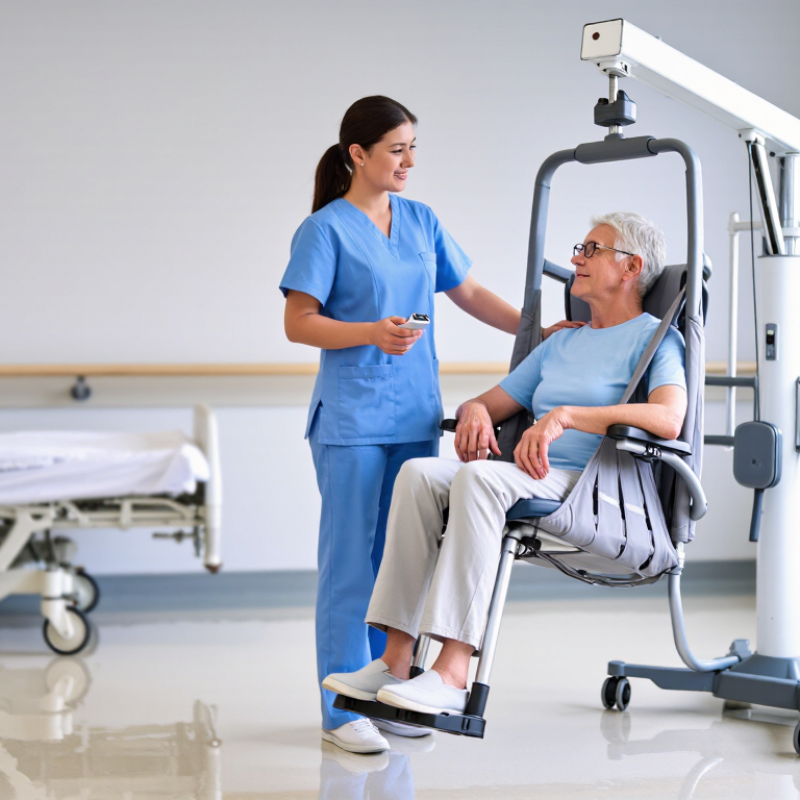
What Patient Lift Slings Are and Why Global Buyers Need Them
Patient lift slings are fabric support devices used with mobile or ceiling-mounted hoists. They cradle the body during transfers between beds, wheelchairs, toilets, and treatment surfaces. Common designs include full-body, toileting, and repositioning slings. Fit matters. A loose sling may increase sliding, while a tight one can create pressure around the thighs or shoulders.
Demand is expanding with global ageing and disability trends. The WHO and UNICEF Global Report on Assistive Technology estimates that more than 2.5 billion people need at least one assistive product today. This figure could exceed 3.5 billion by 2050. For global buyers, slings are not simple textile purchases. They require verified load ratings, clear sizing charts, washable materials, durable seams, and traceable instructions. ISO 10535:2021 provides relevant requirements and test methods for hoists and body support units.
Procurement teams should compare sling geometry, attachment points, laundering temperatures, drying limits, and inspection procedures. A bright label is useful, but it does not prove safety. Staff should check stitching, loops, fabric wear, and patient positioning before every transfer. The wrong size remains a common and preventable weakness. Specifications can still miss comfort, dignity, or caregiver workflow. Buyers should request samples and test them with real equipment and representative users. It takes time. That small delay may reveal a major problem.
Top 10 Patient Lift Sling Suppliers for Global Buyers
Patient lift slings are supportive textile harnesses used with powered or manual patient lifts to transfer people safely between beds, wheelchairs, toilets, and other surfaces. Global buyers should match the sling design, attachment configuration, size, weight capacity, and laundering requirements to the needs of caregivers and patients.
Common Patient Lift Sling Configurations
Two-point slings are often used for simpler transfers, while four-point and six-point configurations can provide greater positioning flexibility. The exact design and safe working load vary by product, lift system, patient condition, and applicable regulatory requirements.
How to Evaluate Patient Lift Sling Suppliers Worldwide
Evaluating patient lift sling suppliers worldwide requires more than comparing prices. Experienced buyers should request product samples, technical drawings, and recent test reports. Check the sling’s safe working load, fabric strength, stitching quality, and washing performance. A reliable supplier should explain compatibility with different lift systems, body-support designs, and user sizes. Small details matter. Inspect seam edges, labels, buckles, and positioning straps before approval.
Supplier credibility also depends on traceable quality controls. Ask whether materials are inspected when received and whether each production batch is documented. Independent testing can support claims about load capacity and durability. Review applicable safety standards for the destination market, but do not rely only on certificates. Confirm their scope, validity, and testing conditions. A polished website can mislead. Factory photographs are not enough. A virtual or in-person audit may reveal weak storage practices, inconsistent labeling, or limited worker training.
Communication is another practical measure. Request clear answers about minimum order quantities, sample timelines, replacement procedures, and shipping protection. Compare responses from at least ten potential suppliers using the same checklist. Slow replies may become serious problems during urgent replenishment. However, fast communication does not prove manufacturing ability. Ask for references from comparable healthcare buyers, while protecting confidential information. Review complaint handling carefully; suppliers that acknowledge defects openly may be more dependable than those promising perfection. I would also leave room for uncertainty, because even a well-audited supplier can change materials, staff, or subcontractors without obvious warning. Regular reviews remain necessary.
Top 10 Patient Lift Sling Suppliers for Global Buyers - How to Evaluate Patient Lift Sling Suppliers Worldwide
An anonymized global buyer comparison using practical supplier-evaluation dimensions. Supplier identifiers are used instead of company or brand names; all technical claims should be verified against current product documentation, test reports, and purchase samples.
| Rank | Supplier Profile | Primary Supply Region | Core Sling Portfolio | Typical Safe Working Load | Common Size Range | Material Options | Compliance Evidence to Request | Traceability Features | Customization Capability | Global Buyer Fit | Evaluation Score |
|---|---|---|---|---|---|---|---|---|---|---|---|
| 1 | Supplier Profile A | Western Europe | Full-body, toileting, transfer, amputee, and hygiene slings | 150–272 kg / 330–600 lb | Extra-small to extra-large | Polyester mesh, padded polyester, breathable spacer fabric | EN ISO 10535 compatibility evidence, risk assessment, load-testing records, care instructions | Lot number, size label, production date, inspection record | High; colors, labels, harness loops, packaging, and size grading | Hospitals, long-term-care networks, and distributors requiring broad coverage | 9.3/10 |
| 2 | Supplier Profile B | Northern Europe | Universal, standing-assist, repositioning, and bathing slings | 136–272 kg / 300–600 lb | Small to bariatric sizes | Low-stretch polyester, polyester mesh, antimicrobial textile options | Mechanical-strength test reports, laundering validation, material safety documentation | Unique product code, barcode-ready labels, batch documentation | Medium to high; private labeling and specification adjustments | Buyers prioritizing documentation, wash durability, and institutional procurement | 9.1/10 |
| 3 | Supplier Profile C | North America | General-purpose, divided-leg, toileting, and pediatric slings | 91–227 kg / 200–500 lb | Infant, pediatric, adult, and bariatric | Polyester webbing, mesh, padded nylon, soft-edge fabrics | Product labeling review, load testing, instructions for use, quality-system documentation | Serial or lot tracking and replacement-history records | Medium; custom dimensions available for volume programs | Healthcare systems seeking compatibility across multiple lift configurations | 8.9/10 |
| 4 | Supplier Profile D | East Asia | Mesh bathing, full-support, toileting, and patient-transfer slings | 100–300 kg / 220–660 lb | Small to extra-large, including bariatric | Polyester mesh, coated fabric, padded textile, quick-dry materials | Third-party tensile testing, seam-strength testing, washing instructions, factory inspection records | Batch labels, carton coding, pre-shipment inspection reports | High; OEM patterns, packaging, labels, and color matching | Importers and distributors balancing customization with competitive production costs | 8.7/10 |
| 5 | Supplier Profile E | Southern Europe | Comfort, positioning, pediatric, and postural-support slings | 80–250 kg / 176–550 lb | Pediatric through bariatric | Breathable mesh, padded polyester, soft-bound edges, support panels | Ergonomic design assessment, seam testing, material declarations, cleaning validation | Size-color coding, product identification label, batch records | High; postural support and clinical-use configurations | Rehabilitation centers and buyers needing comfort-focused designs | 8.6/10 |
| 6 | Supplier Profile F | South Asia | Basic full-body, U-shaped, divided-leg, and toileting slings | 100–250 kg / 220–550 lb | Small to extra-large | Polyester fabric, mesh, nylon webbing, reinforced textile panels | Independent load testing, seam inspection, fiber-content declaration, quality-control checklist | Batch number, inspection stamp, export carton identification | High; suitable for private-label and contract-manufacturing programs | Distributors seeking flexible specifications and scalable production | 8.3/10 |
| 7 | Supplier Profile G | Central Europe | Standing-assist, transfer, repositioning, and high-support slings | 125–300 kg / 275–660 lb | Medium to bariatric sizes | High-strength polyester, breathable mesh, padded support fabrics | Load-capacity validation, compatibility instructions, laundering tests, technical file summary | Digital product records, batch traceability, controlled revision history | Medium; configuration changes subject to technical review | Professional buyers requiring strong technical documentation and repeatability | 8.2/10 |
| 8 | Supplier Profile H | Southeast Asia | Economy full-body, bathing, toileting, and transfer slings | 100–272 kg / 220–600 lb | Small to extra-large | Polyester mesh, standard polyester, nylon reinforcement webbing | Factory quality plan, tensile test data, sample inspection, care-label verification | Production batch code and shipment inspection record | High; packaging, dimensions, colors, and labeling | Cost-conscious importers that maintain their own incoming inspection program | 8.0/10 |
| 9 | Supplier Profile I | Latin America | General transfer, hygiene, toileting, and home-care slings | 90–225 kg / 198–496 lb | Small to large, selected bariatric models | Polyester, mesh, padded synthetic textile, reinforced straps | Material certificates, load testing, local labeling review, cleaning guidance | Batch identification and manual quality-control records | Medium; suitable for regional product adaptation | Regional distributors prioritizing shorter supply routes and local support | 7.8/10 |
| 10 | Supplier Profile J | Middle East and North Africa | Basic patient-transfer, full-support, toileting, and home-care slings | 100–250 kg / 220–550 lb | Medium to extra-large | Polyester mesh, coated fabric, padded polyester, heavy-duty webbing | Third-party test report, product specification sheet, user instructions, pre-shipment inspection | Batch labeling and shipment-level documentation | Medium; branding and packaging adjustments generally available | Buyers serving home-care, nursing, and institutional markets in developing regions | 7.6/10 |
Buyer verification checklist: Confirm the sling’s safe working load, compatibility with the intended lift and spreader bar, size chart, attachment-loop configuration, laundering limits, seam and strap strength, user instructions, labeling requirements, warranty terms, replacement availability, and applicable market-access documentation before placing an order. A supplier score is a screening aid rather than a certification or product-safety guarantee.
Profiles of the Top 10 Patient Lift Sling Suppliers
The following profiles assess ten leading patient lift sling suppliers by design capability, compliance, customization, and service reach. Supplier 1 focuses on full-body slings for hospitals. Supplier 2 specializes in toileting designs with open-seat access. Supplier 3 supplies bariatric slings, often using reinforced webbing and wider support panels. Supplier 4 develops pediatric models with softer contours. Supplier 5 serves home-care providers and emphasizes simple fitting. Supplier 6 offers reusable slings designed for frequent laundering. Supplier 7 produces disposable options for infection-control programs. Supplier 8 supports ceiling-lift systems and compatibility testing. Supplier 9 provides custom sizes for unusual body shapes. Supplier 10 combines regional distribution with technical training.
Material selection deserves close inspection. Polyester remains common because it dries quickly and tolerates repeated washing. Mesh panels can improve drainage, but they may feel less supportive for frail users. Suppliers should state safe working loads, washing limits, loop configurations, and inspection procedures. ISO 10535:2021 provides relevant requirements for hoists and patient transfer equipment. Buyers should request test records, not only attractive brochures.
The WHO and UNICEF Global Report on Assistive Technology estimates that more than 2.5 billion people need assistive products worldwide. That demand increases pressure on suppliers to provide reliable after-sales support. Market forecasts also indicate steady growth in patient lifting equipment, although estimates differ by research firm and product definition. This matters. A low purchase price can hide replacement costs, training gaps, or poor fit. In practical evaluations, assess seam strength, labeling, drying time, and caregiver handling. One weakness remains common: some supplier claims lack independently verifiable test evidence.
Comparing Materials, Designs, Certifications, and Customization Options
Top 10 Patient Lift Sling Suppliers for Global Buyers
Material and design decisions directly affect comfort, hygiene, and transfer safety. Polyester offers durability and quick drying after repeated washing. Mesh improves airflow and supports bathing transfers. Padded sections can reduce pressure around the thighs and shoulders. However, softer fabric does not always mean better support. A poorly shaped sling may cause sliding, even with strong stitching.
Buyers should compare weight ratings, attachment loops, seam strength, and size ranges. The WHO and UNICEF Global Report on Assistive Technology estimates that over 2.5 billion people need assistive products today. This figure may exceed 3.5 billion by 2050. Demand will grow, but product quality must grow with it. Suppliers should provide traceable test records and explain compliance with standards such as ISO 10535:2021. An ISO 9001 certificate can indicate quality management, but it does not prove sling performance. That distinction is often missed.
Tips: Request sample slings before bulk orders. Test fit with real users, including seated posture and transfer angles. Check washing instructions, colorfastness, drying time, and replacement parts. Ask whether custom designs include updated load testing. Customization may cover dimensions, head support, toileting access, fabrics, and loop colors. Yet custom work can create inconsistent documentation. I would not accept verbal assurances alone. Require drawings, approved specifications, inspection reports, and clear labeling for each size.
How Global Buyers Can Select and Purchase the Right Supplier
Global buyers choosing among the top patient lift sling suppliers need more than a low quoted price. The safest choice begins with application details: user weight, transfer type, washing frequency, and caregiver workflow. Ask for documented load testing, stitching specifications, material composition, and size tolerances. Request samples. Inspect every seam, loop, label, and attachment point. A sling should support the patient without creating pressure near the thighs or shoulders. Look for clear instructions, traceable batch numbers, and multilingual packaging when shipments cross borders.
When comparing ten suppliers, score them against the same purchasing checklist. Review production capacity, minimum order quantity, lead time, replacement policy, and quality-control records. Confirm whether independent laboratories verify relevant performance claims. A responsive sales team helps, but written evidence matters more. Ask how rejected units are isolated and how corrective actions are recorded. For international orders, clarify shipping terms, customs documents, payment milestones, and spare-sample availability before signing. Do not accept vague promises about compliance. Requirements differ by destination.
A factory visit or live video audit can reveal details photographs hide. Watch workers inspect webbing, count stitches, and pack finished slings. Check whether the supplier can repeat the approved sample exactly. One overlooked issue is after-sales training; caregivers need practical guidance, not only a product sheet. A polished catalog may still conceal inconsistent sizing or delayed support. That possibility deserves an honest risk allowance. Sometimes the cheapest quotation becomes the most expensive purchase after returns, retraining, and emergency replacements.
Related Posts
-
Ultimate Guide to Choosing the Right Medical Lift Sling for Your Needs
-
2026 Top Medical Lift Sling Benefits and Uses Explained
-
Top 5 Patient Lifting Equipment Tips for Caregivers?
-
Emerging Trends in Ceiling Track Hoists for 2025: The Future of Lifting Solutions
-
How to Choose the Best Mobile Patient Lift for Your Healthcare Setting
-
Future Trends in Sit to Stand Lift Rental for 2025 and How to Choose the Best Option